
IZBA
UK to US Market Expansion Guide

Expanding Into the US From the UK? The Shared Language Is the Trap.

Same language, familiar brands, and a checkout that looks the same in a screenshot can make it easy to assume the US is just a bigger UK. It is not. Here is what actually changes and how to avoid finding out the hard way.

UK brands expanding into the US face four real shifts: customer acquisition costs that are 2–4x higher, fulfillment that requires multiple nodes instead of one warehouse, a state-by-state compliance patchwork instead of one regulator, and a tax system with no VAT equivalent. Brands that plan for these shifts before launch outperform brands that discover them later.

Free 30-min strategy session • No commitment required

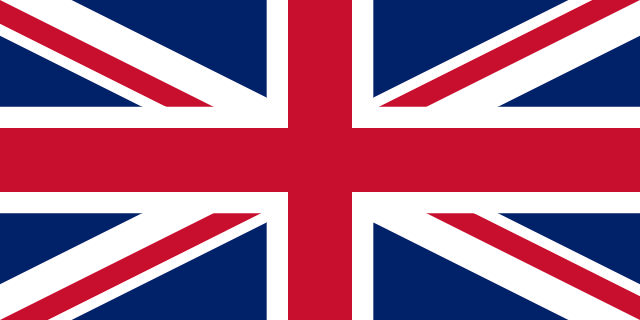
UK to US expansion guide, United Kingdom flag
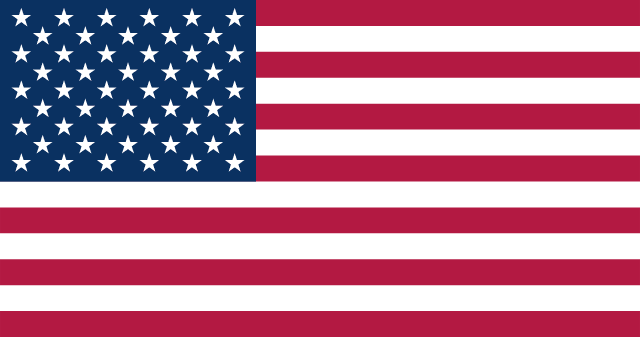
UK to US expansion guide, United States flag

What This Guide Covers:

  • Why the shared language works against you
  • Two real UK brands and two different playbooks
  • The unit economics US expansion actually requires
  • Operator-led, not agency-led

Is the US Market Worth It for UK Brands?

Yes, but not automatically. The US is the largest consumer market in the world, and it is not a plug-and-play extension of the UK.

Opportunity

  • Largest consumer market in the world, by a wide margin
  • No language barrier to slow down marketing or customer service
  • UK and EU brands often arrive over-compliant on safety and ingredient standards

Reality

  • CAC runs 2–4x higher than UK equivalents in most categories
  • One UK warehouse will not cover a country the size of the US
  • No single national regulator; compliance is a state-by-state patchwork

The upside is real. So is the cost of underestimating how different this market actually is.

What Actually Changes When a UK Brand Expands to the US?

Five things change. The biggest risks are not the parts that feel unfamiliar, but the parts that look the same and are not.

  1. 01

    Regulatory & Labeling

    UK and EU standards are generally stricter than US federal baselines, so you likely arrive prepared. The catch is that the US has no single national regulator. State rules like California's Prop 65 catch brands that assumed "FDA-compliant" meant "compliant everywhere."

  2. 02

    Market Entry & Channel

    Retail buyers in the US increasingly want proof of demand before they engage, which makes DTC the proving ground, not the lesser channel. Whether to launch on Shopify or Amazon first depends on whether you already have measurable US demand.

  3. 03

    Customer Acquisition Cost

    CPCs run 2–4x higher in the US than UK equivalents across most categories. If your CAC-to-LTV math is fragile in the UK, it will not survive the US. It will break faster.

  4. 04

    Fulfillment & Logistics

    The first decision is whether to launch locally in the US or ship cross-border from the UK by expedited parcel while you prove demand. Once you localize, a single UK-style warehouse will not cover the country. The US requires multi-node fulfillment, and UK habits like signature-required delivery do not transfer to a doorstep-drop-off market.

  5. 05

    Legal & Tax

    The US has no VAT-equivalent single tax authority. Sales tax obligations are triggered state by state, often by where you hold inventory. Your UKIPO trademark also does not extend to the US; USPTO filing is separate.

Each of these changes is manageable on its own. Together, without a plan, they can turn a promising launch into a cash-flow problem.

How Have Real UK Brands Actually Done This?

Two real, anonymized examples show why there is not one right way to enter the US. The right approach matches how your brand actually grows.

Case 1

The Digital-First Apparel Brand

Built entirely through influencer partnerships and digital community before addressing the US. The brand crossed $200M in US revenue before hiring a single US-based employee, putting brand first and team second. It opened a physical footprint, first a pop-up and then a US headquarters, only after digital traction was proven. The US became its largest market within a few years.

Proof: you can build US demand remotely before you build US infrastructure.

Case 2

The Credibility-First Skincare Brand

Grew for more than a decade almost entirely through professional channels, including medispas, clinics, and therapists, before pursuing broad consumer reach. The brand took growth capital specifically earmarked for international and US expansion once the model was proven. Its US revenue share grew sevenfold in the years that followed.

Proof: a slower, trust-first channel strategy is just as viable as a digital blitz if you bring in the capital and operational support to execute once demand is proven.

Neither brand guessed its way into the US. Both followed a deliberate sequence. That is the part a template cannot give you because it has to match your brand.

Why Do UK Brands Bring In Izba Before They Launch?

A guide can tell you what changes. It cannot tell you what your specific brand should do about it. That is where a UK brand actually needs help.

We do the operational work, not just the advising

Izba is operator-led, not agency-led. We do not hand you a deck and leave. We help build the compliance, fulfillment, and channel plan, then stay through execution.

We already have the cross-border compliance practice

Our team includes a licensed US customs broker on staff who works with brands moving goods and businesses across the US border every week. The state-by-state patchwork this guide describes is exactly what we untangle for clients before it becomes an expensive surprise.

We have built this exact playbook before

We have already done this work for Canadian brands expanding into the US, using a playbook built from real client engagements rather than theory. The UK playbook draws on that same operator experience, adapted for what is actually different about a UK starting point.

We fix the right things in the right order at the right pace

Most failed US expansions are not failures of ambition. They are sequencing mistakes. Inventory moved too early. Paid spend scaled before retention was proven. We help you sequence the work correctly the first time instead of unwinding costly decisions a year later.

We are not here forever. We are here to leave your US operation stronger than we found it.

How Do US Customers Actually Behave Differently Than UK Customers?

Small differences quietly affect conversion, trust, and margin.

BehaviorWhat It Means
Doorstep drop-off is the defaultNo signature is required for most deliveries, unlike common UK click-and-collect habits
Credit-first payment cultureBNPL is growing but faces more scrutiny than in the UK's debit-first market
Bold branding focused on service and speedPolished, price-sensitive UK positioning does not always translate directly
State-by-state regulation instead of one frameworkWhat is compliant nationally in the UK may not be compliant in every US state
Higher return ratesReverse logistics costs more and needs to be planned for upfront

None of these differences is disqualifying. They are just different enough that copying your UK playbook will cost you before you notice why.

Why Do UK Brands Struggle When Expanding to the US?

Patterns we see repeatedly. Awareness is the first defense.

  • Assuming shared language means shared customer behavior
  • Skipping label and product-page localization because there is no translation step
  • Duplicating inventory before US demand is actually proven
  • Scaling paid media before retention and CAC-to-LTV are stress-tested
  • Treating the US as one market instead of a set of regional beachheads
  • Discovering state tax nexus or USPTO trademark gaps after they are expensive to fix

The UK to US Expansion Checklist

Twenty-one checks across four categories. Read them here or download the complete checklist below.

Strategy & Channel

  • Confirm existing US demand signals before committing capital
  • Set a 12-month US P&L target using US CAC assumptions, not home-market CAC
  • Model CAC at 2–4x UK levels before scaling paid spend
  • Decide DTC-first vs. retail-first based on your current wholesale mix
  • Choose Shopify or Amazon first based on existing US awareness
  • Fund at least six months of structured testing before drawing conclusions

Compliance & Labeling

  • Confirm federal FDA and FTC requirements for your product category
  • Check relevant state-level requirements, including Prop 65
  • Run a full label and product-page localization review
  • Update Nutrition Facts formatting if applicable
  • Audit all marketing claims against US standards

Operations & Logistics

  • Decide whether to fulfill locally or ship cross-border from the UK
  • Choose one centrally located US fulfillment node when ready to localize
  • Plan multi-node fulfillment only when regional volume justifies it
  • Set delivery and service expectations around US norms
  • Build a returns and reverse logistics process before launch

Legal & Tax

  • Map sales tax nexus exposure before placing US inventory
  • File a USPTO trademark separately from your UKIPO registration
  • Determine the right entity structure
  • Confirm EIN or TIN registration and import requirements
  • Line up a US-side accountant or counsel before your first US sale

Download the Full Checklist

Get the complete UK to US expansion checklist with twenty-one checks across strategy, compliance, operations, and legal. It is free.

Frequently Asked Questions

Thinking About the US? Let's Look at Where You Actually Stand.

Get a free operational foundation assessment built around your brand, not a generic template. No long-term commitment required.

Free assessment • No long-term commitment • Project pricing • Startup-friendly terms