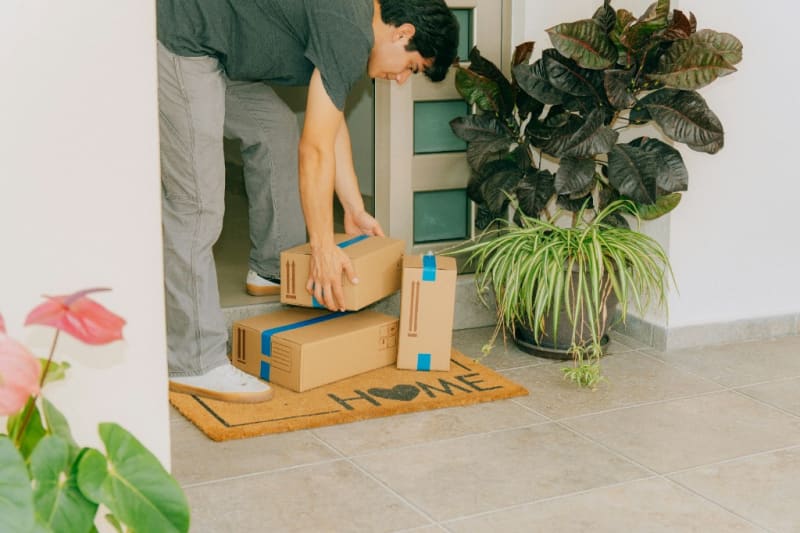
Most of what's written about channel expansion runs one direction: a DTC brand gets its first big-box PO and scrambles to learn EDI, routing guides, and chargebacks. That story gets told a lot, because it's the more common one. The reverse story gets told far less, and it's arguably the harder problem. A wholesale brand launching a DTC channel isn't adding a new sales line to an existing operation. It's asking a fulfillment stack built for pallets and purchase orders to suddenly ship one unit at a time to a stranger's front porch, on a timeline set by a marketing calendar instead of a buyer's PO.
We're in the middle of exactly this kind of project right now, running a 3PL RFP for a wholesale-first brand standing up its first Shopify storefront. Pulling the zone and shipping data for the cost model made one thing obvious fast: almost nothing about the current fulfillment setup transfers cleanly. Below is what actually changes, and what to put in front of a 3PL before you sign anything.
What actually changes when a wholesale brand launches a DTC channel?
Wholesale fulfillment moves in full pallets and cases to a small, known set of distribution centers, on a schedule set by purchase orders and routing guides. DTC fulfillment moves in single units, to thousands of individual, unpredictable addresses, on a schedule set by whatever the marketing team sends today.
That difference sounds obvious stated plainly, but it's easy to underestimate how far it reaches. It touches the cost model, the storage layout, the carrier contracts, the returns process, and the staffing plan, all at once. A wholesale brand launching a DTC channel is really running two different logistics businesses under one roof, and most fulfillment stacks were never built to do that.
Why isn't a wholesale fulfillment stack ready for DTC economics?
Because the unit of cost changes completely. Wholesale fulfillment is priced and planned around the case or pallet: a single outbound shipment might carry hundreds of units to one distribution center, so the pick, pack, and freight cost gets spread thin across a lot of volume. DTC fulfillment prices and plans around the individual parcel: one order, usually one to three units, going to one residential zip code, shipped through a zone-based parcel network instead of an LTL or FTL freight lane.
Pallet storage typically runs $18 to $25 per pallet per month, with coastal metro markets running 30 to 50% above that (fulfill.com), and that cost gets absorbed across everything the pallet holds. A parcel order doesn't get that luxury. Per-order pick and pack for a B2C shipment averages around $3.20, against roughly $4.80 for a B2B order (fulfill.com), and that B2B figure is covering a shipment that's often ten or a hundred times the size. Run the math per unit shipped rather than per order, and DTC costs considerably more, before a single mile of parcel freight is even added on top of it.
| Wholesale fulfillment | DTC fulfillment | |
|---|---|---|
| Shipment unit | Pallet or case | Single parcel, 1-3 units |
| Destination | Handful of known DCs | Thousands of individual addresses |
| Carrier type | LTL / FTL freight | Zone-based parcel (FedEx, UPS, USPS) |
| Demand driver | Purchase order, forecast | Marketing calendar, real time |
| Cost sensitivity | Amortized across volume | Per unit, per zone, per address |
This is also why zone and shipping data matters so much before a DTC launch. Parcel carriers price by distance zone from the fulfillment center, so where a 3PL's facility sits relative to a brand's actual customer base can swing landed cost more than almost any other variable in the RFP.
What does DTC do to a returns operation that wholesale never required?
Wholesale fulfillment deals in deductions and chargebacks, not consumer returns. A retailer might dispute an invoice or short a payment over a routing violation, but it almost never sends a single unit back to the warehouse for grading and restocking. DTC introduces a physical returns operation that a wholesale-only 3PL has often never had to build: intake, inspection, grading, restocking or disposition, and a refund or exchange tied to it.
That operation isn't free. Return rates for food, beverage, and supplement categories run lower than DTC overall, averaging around 12% and 7% respectively against a roughly 14.8% blended DTC average (Eightx, 2026 return rate benchmarks), but even a modest rate adds up at volume. Each return costs an estimated $10 to $65 to process once reverse shipping, labor, and restocking are counted, and only about 48% of returned inventory sells again at full price ({Eightx}(https://eightx.co/blog/average-ecommerce-return-rate (opens in new tab))). A wholesale brand launching a DTC channel needs to ask a prospective 3PL exactly how they grade, restock, and report on returns, because for many wholesale-oriented providers, the honest answer is that they don't have a process yet.
How do marketing-driven demand spikes break a 3PL built for wholesale volume?
Wholesale demand is forecastable. A purchase order arrives weeks or months ahead of the ship date, tied to a planned promotion or a seasonal reset, and a 3PL sized for case-pick throughput can plan around it. DTC demand doesn't wait for a planning cycle. An email send, a paid campaign, or an influencer post can multiply order volume overnight, with no purchase order and often very little warning.
A 3PL that has only ever staffed to wholesale volume plans its labor around a steady, predictable pick rate. It has no muscle memory for a Tuesday that suddenly needs three times Monday's picks because a promotion went out at 9am. That's not a hypothetical risk. It's the exact scenario a DTC launch needs answered before go-live: what does surge staffing actually look like, what does it cost, and how much notice does the 3PL need before a planned spike to avoid missing ship windows.
What should go into a 3PL RFP for a wholesale brand launching a DTC channel?
Score DTC and wholesale as two separate questions in the same RFP, even when evaluating the same provider for both. A 3PL that runs an excellent retail compliance operation can still be a poor fit for a Shopify launch, and the two shouldn't be judged on the same rubric.
A few things worth asking directly:
- A dedicated DTC rate card, not a wholesale rate card with a parcel surcharge bolted on.
- Zone coverage relative to the actual customer base, not just the brand's existing distribution footprint.
- A concrete returns process: intake, grading, restocking, and reporting, with real numbers behind it.
- A documented surge staffing plan, including cost and lead time, for a marketing-driven spike.
- Systems integration built for a DTC storefront (Shopify, WMS, OMS), not only EDI built for big-box retail.
- References from brands running both channels through the same facility, not just wholesale-only references.
Most 3PL RFPs take several months start to finish, and vendors typically need four to six weeks to return a quality proposal (MyFBAPrep). Building in that runway, and treating DTC as its own evaluation track rather than an add-on to an existing wholesale contract, is what actually protects the launch date.
Common questions about wholesale brands launching DTC
Can the same 3PL handle both wholesale and DTC fulfillment?
Yes, but only if it can show separate operational muscle for each, not just a single case-pick process with a parcel label added at the end. Ask for DTC-specific pricing, DTC-specific returns handling, and DTC-specific staffing plans before assuming one facility can do both well.
How long does a 3PL RFP take when adding a DTC channel?
Plan for several months end to end, with four to six weeks for vendors to return proposals once the RFP goes out. A wholesale brand launching a DTC channel should start the RFP well ahead of any marketing launch date, not after one's already been set.
What's the biggest hidden cost when a wholesale brand adds DTC?
Cost per unit, not cost per order. Wholesale pricing looks efficient because it's spread across a full pallet or case. DTC strips that away, pricing each order, each zone, and each return on its own, which is why the same fulfillment stack that works for retail often loses money quietly on the DTC side until someone models it unit by unit.
Launching a DTC channel from a wholesale base isn't a marketing decision. It's an operations decision that marketing happens to trigger. Getting the fulfillment model right before the first order ships is the difference between a channel that scales and one that quietly bleeds margin from day one.
If your team is weighing a DTC launch and isn't sure your current 3PL relationship can carry it, that's exactly the kind of question our Scale work is built to answer.